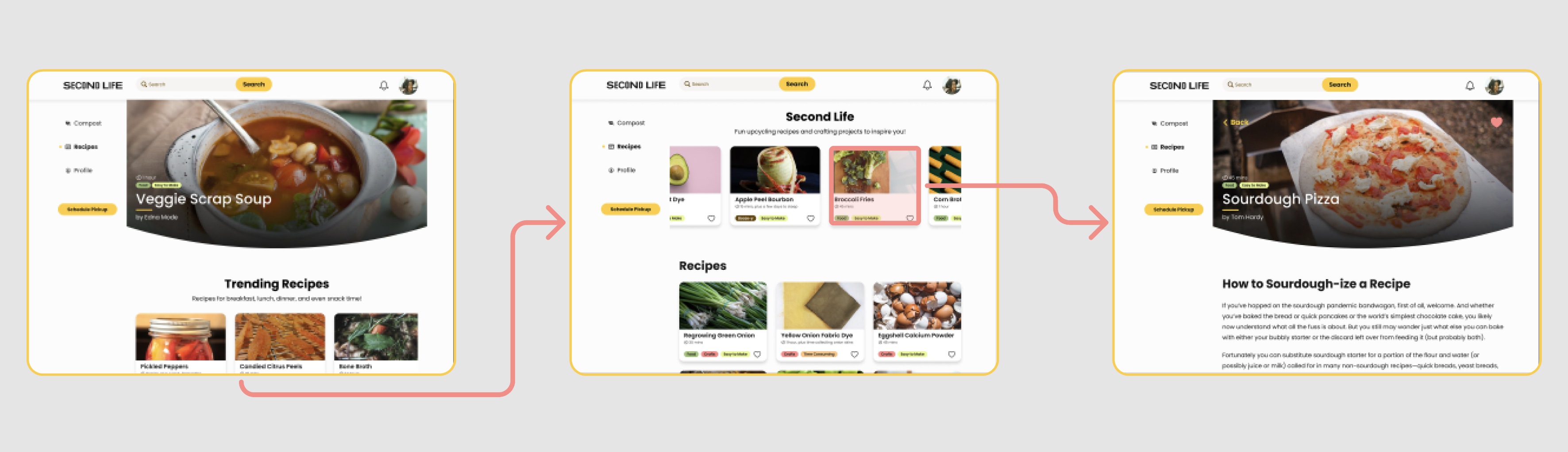
Process
I broke this project down into 4 phases:
-
Strategy and Preparation
-
Discovery
-
Design
-
Prototyping
Discovery took the most time as I wanted to create a tool rooted in realism. The tool would only work if
it was something people would realistically use.
Interviews
Based on the interviews, there were main takeaways to consider. The Composting SME felt that educating people
on how to deal with food before it goes rotten was the most important topic to cover as it prevents waste,
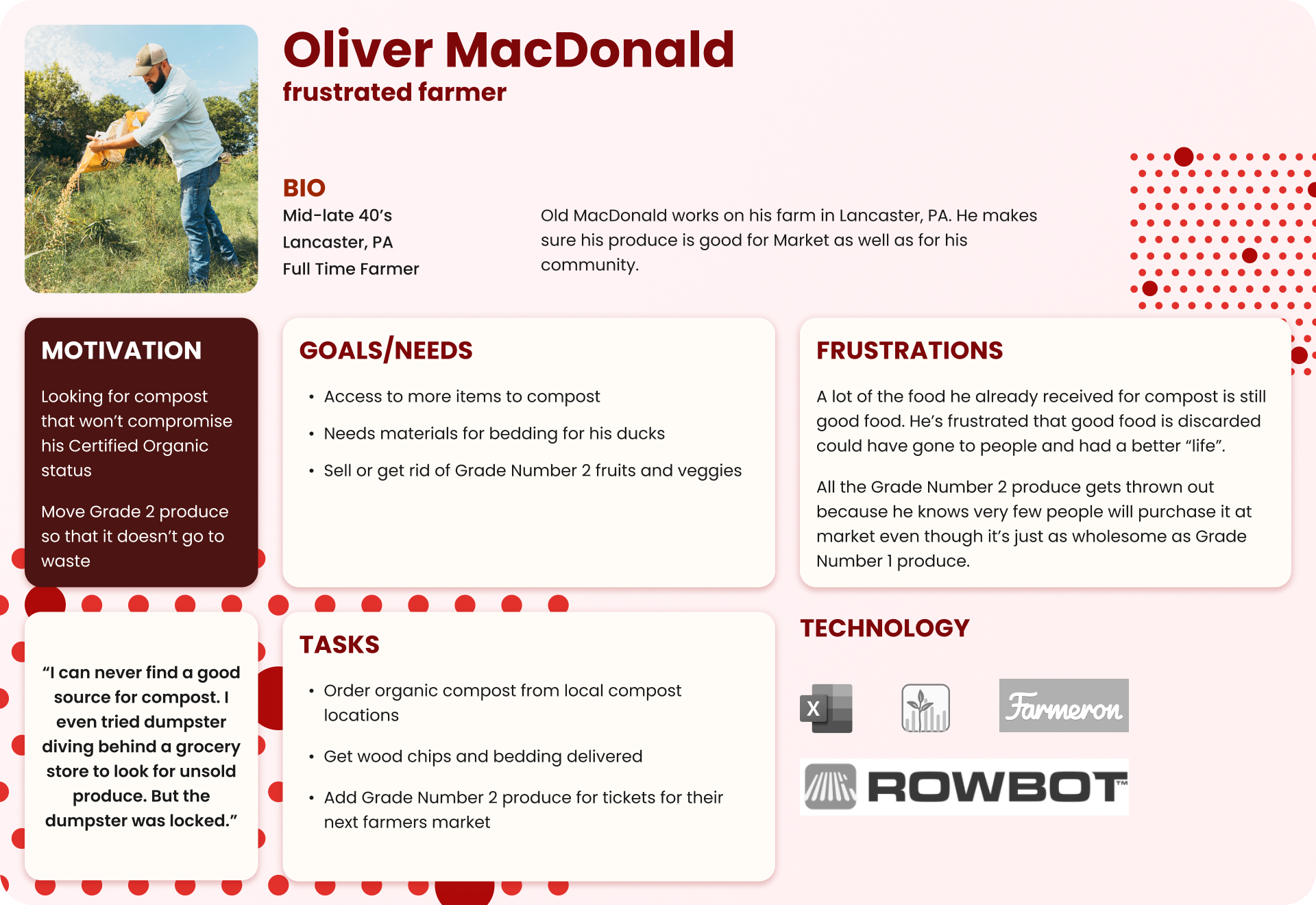
cuts down on spending, and informs the farmers about how much produce to provide. Both interviewed farmers
said they needed external sources of compost, with one of them even having to dumpster dive behind a grocery
store. One of the interviewed consumers preferred if it was a communal pick-up to ensure that there was a
drop-off point in their apartment complex and mitigate worry about scheduling a pick-up. Another consumer,
who had previous composting experience, mentioned people would need different sized bags for composting as
different household sizes have varying needs. They also explained a ticket system that some states have with
farmers' markets to give produce to seniors and low-income individuals/households.
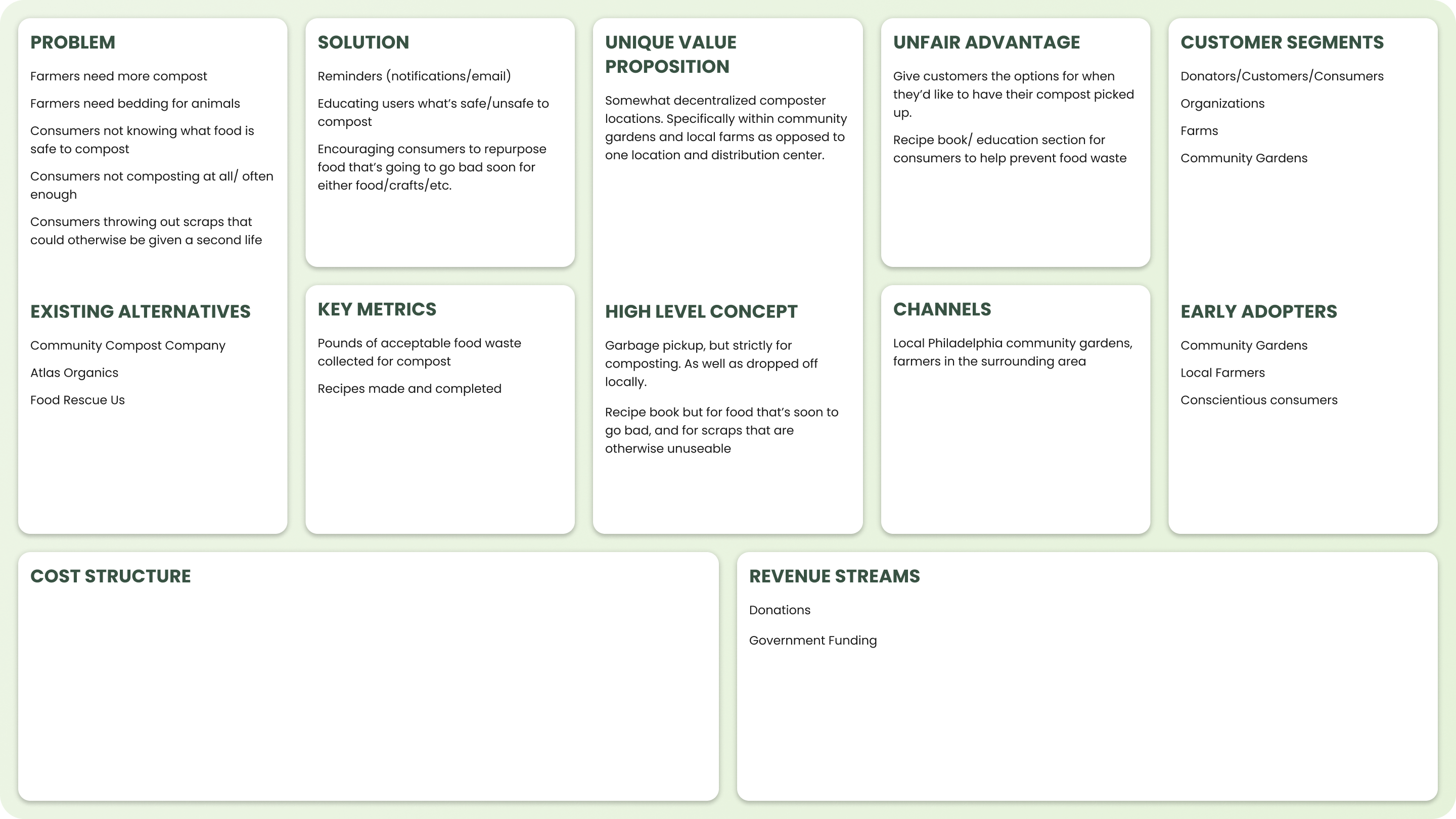
Lean Canvas
Based on initial research, secondary research, and interviews, I set up a canvas in Figma so I could see what
ideas arose and could guide me through the rest of the project.
Affinity Map
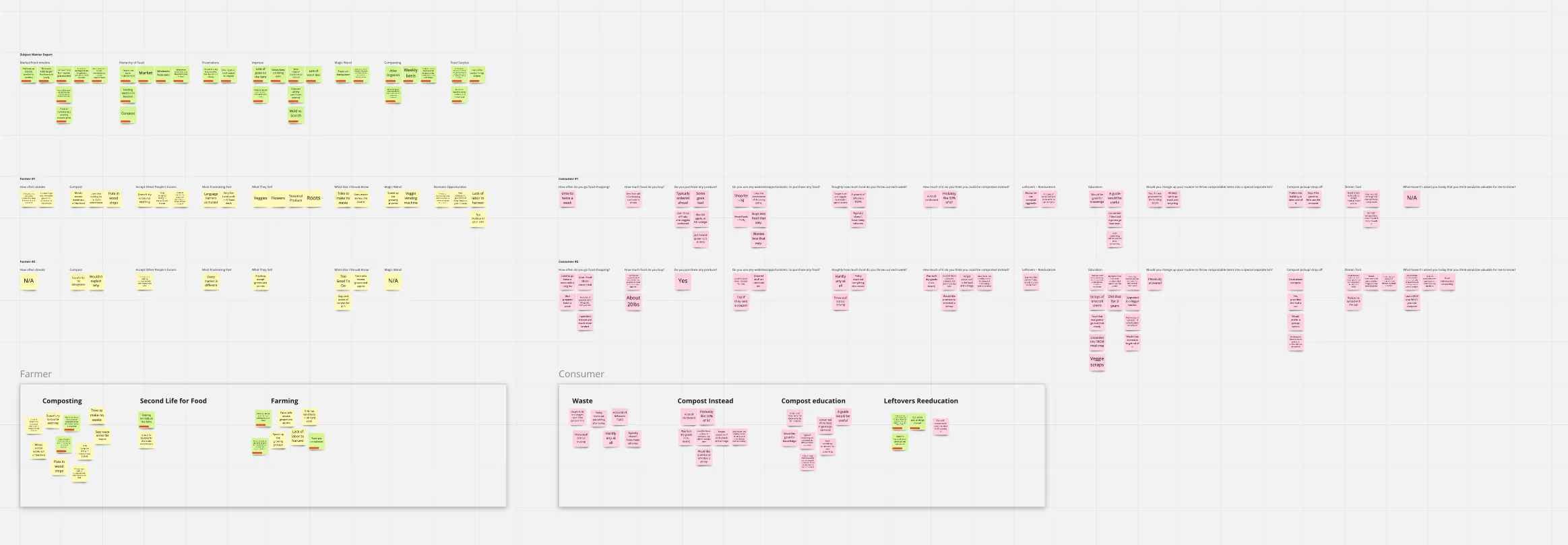
I used Miro to make an Affinity Map to log all of the interview responses and to help look for patterns
amongst my participants. The Farmers’ patterns were that they:
-
Do their best to create as little waste as possible
-
Use compost for both crops and animal bedding
-
Do not want to do anything that could put their Certified Organic status at risk
Consumers’ patterns were that they:
-
Do their best to eat and/or prepare everything they purchase, but some things do end up falling
through the
cracks
-
Would like to learn what they can and cannot compost
-
Would also like to learn what else to do with their food before it goes bad, as long as it is
low-effort
Competitive Analysis
Based on these interviews, I looked into companies that were mentioned to gain an understanding of their
successes and faults. Here are the Top 3 that I learned and gleaned from:
Community Compost Company
Community Compost Company collects specifically food scraps from residential and commercial spaces for
compost. I especially liked that they have communal drop spots for composting. This led to my idea of
working with community gardens to help supply them with compost and potentially act as a drop-off and
pick-up point for larger farmers.
Atlas Organics
Atlas Organics is a membership based compost pickup service that collects compost from residential and
commercial spaces. Their educational section on their website inspired me to add the Recipes section of
the tool, allowing people to share their recipes and knowledge with the larger Second Life Composting
community.
Food Rescue Us
Food Rescue Us is an entirely volunteer based organization, picking up food donations from local donors
like grocers, restaurants, and caterers. Their business model is decentralized since they are volunteer
based. Their mission is focused on food “rescue,” this way the it’s given a purpose before being
regarded as “waste.”
User Journey Map
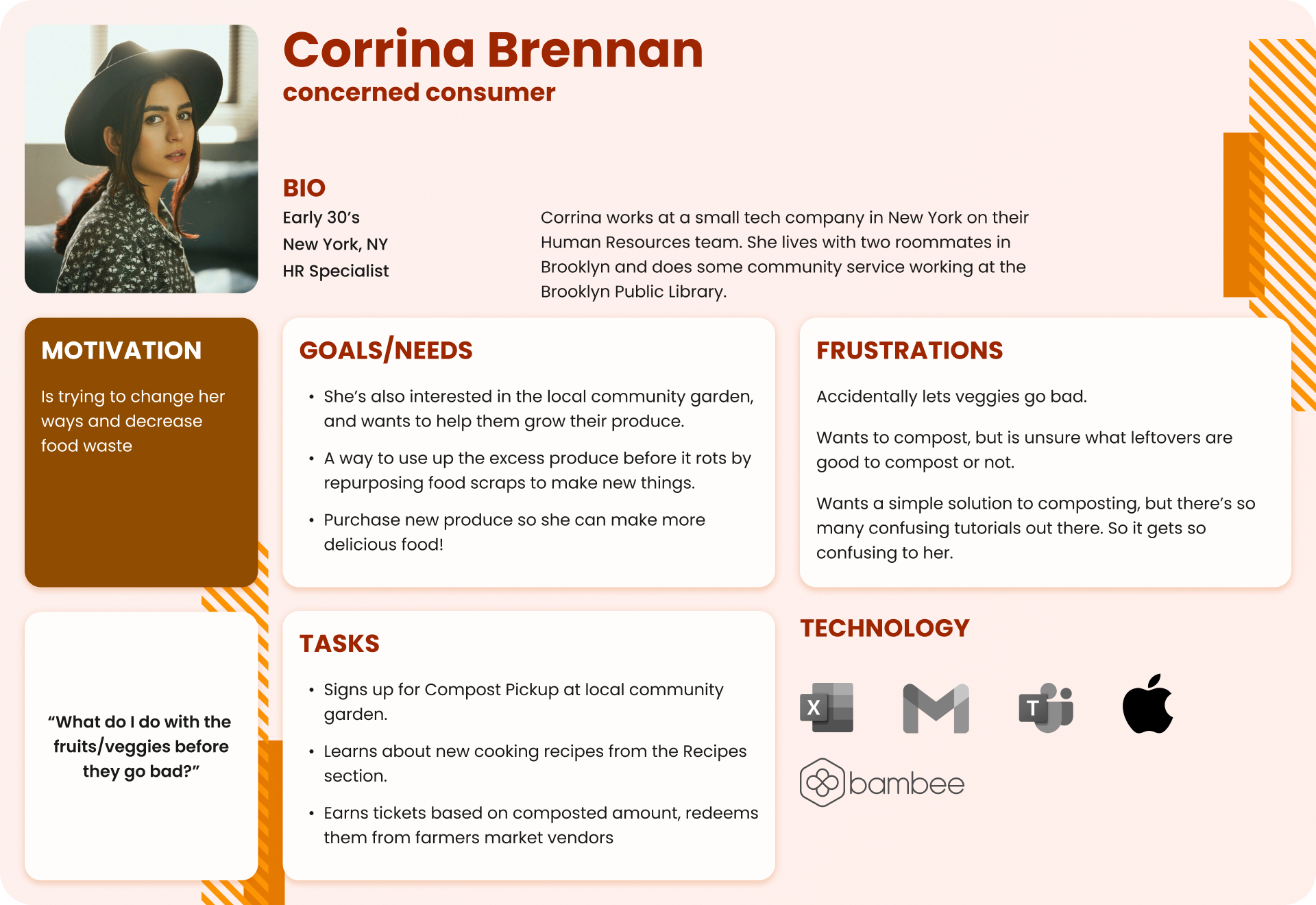
Due to time constraints, I focused on designing for Corrina’s user needs for Second Life Composting.
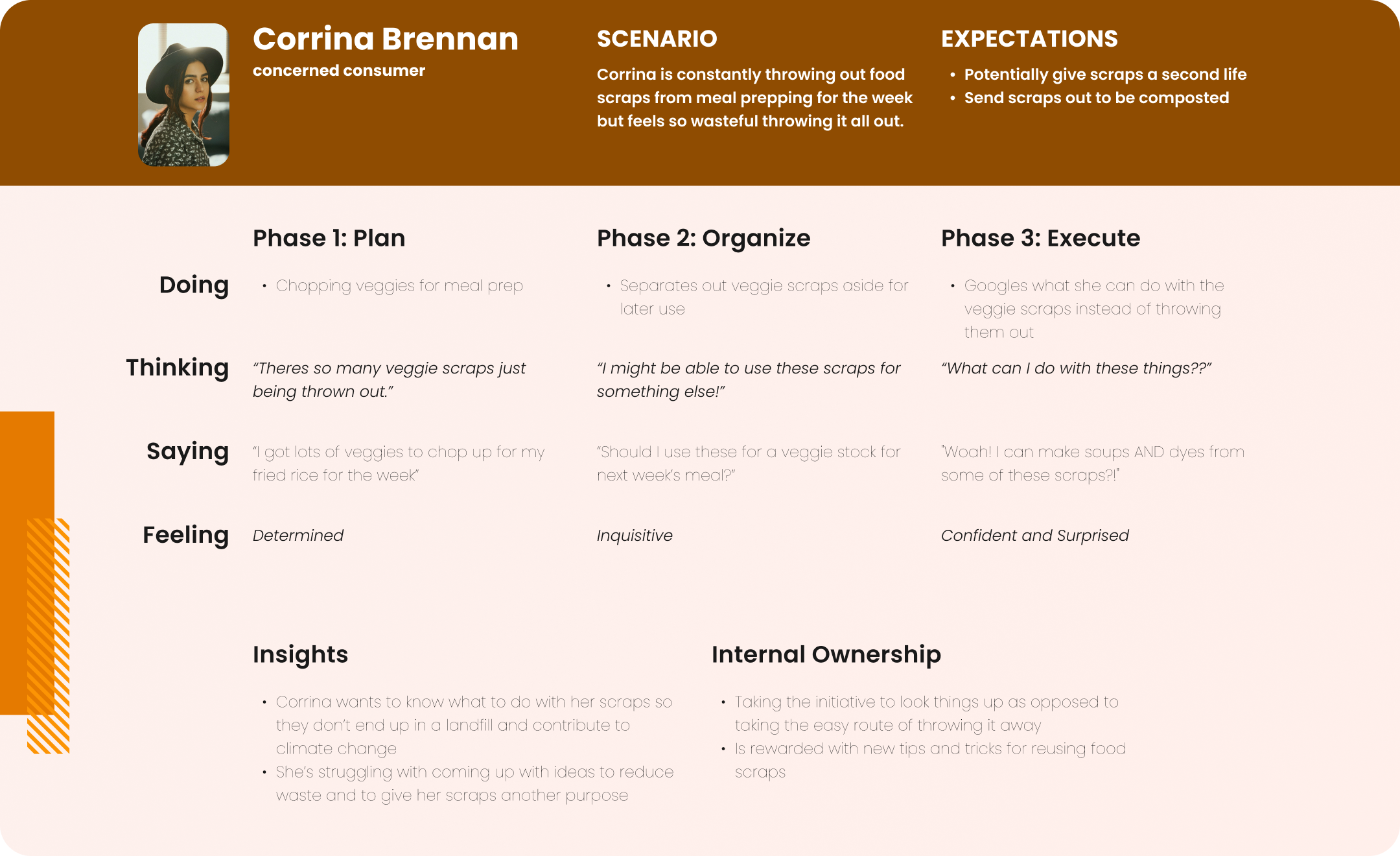
Her journey follows a procedure, starting with when she has ingredients to cook but is unsure about what to
do with them. She ends up looking up advice online, hoping someone else has been in a similar situation and
has a potential solution. Finally, confident with what she can do with her scraps, she avoids creating more
“waste.”
Information Architecture
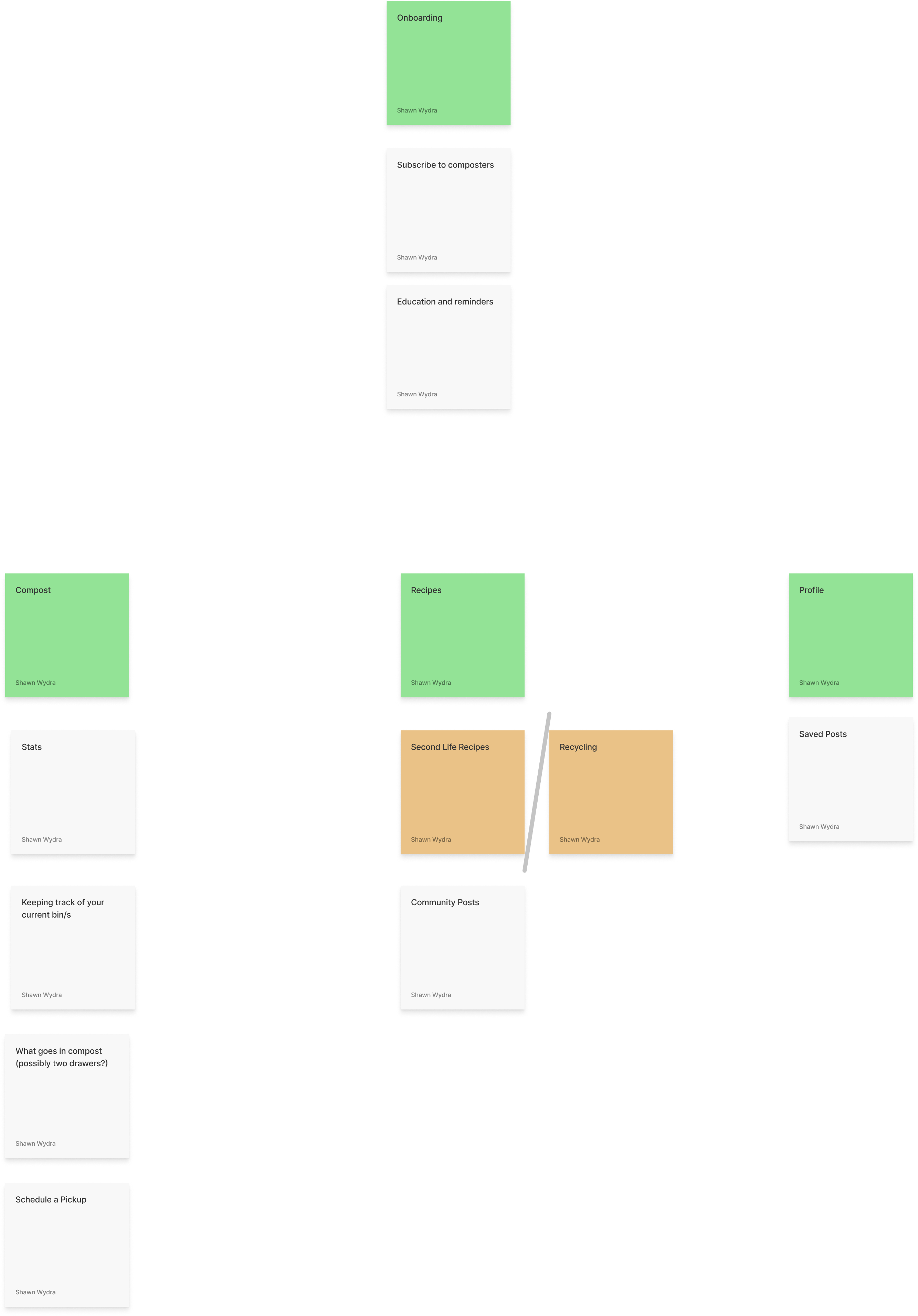
I broke all the Information Architecture down into three separate pages:
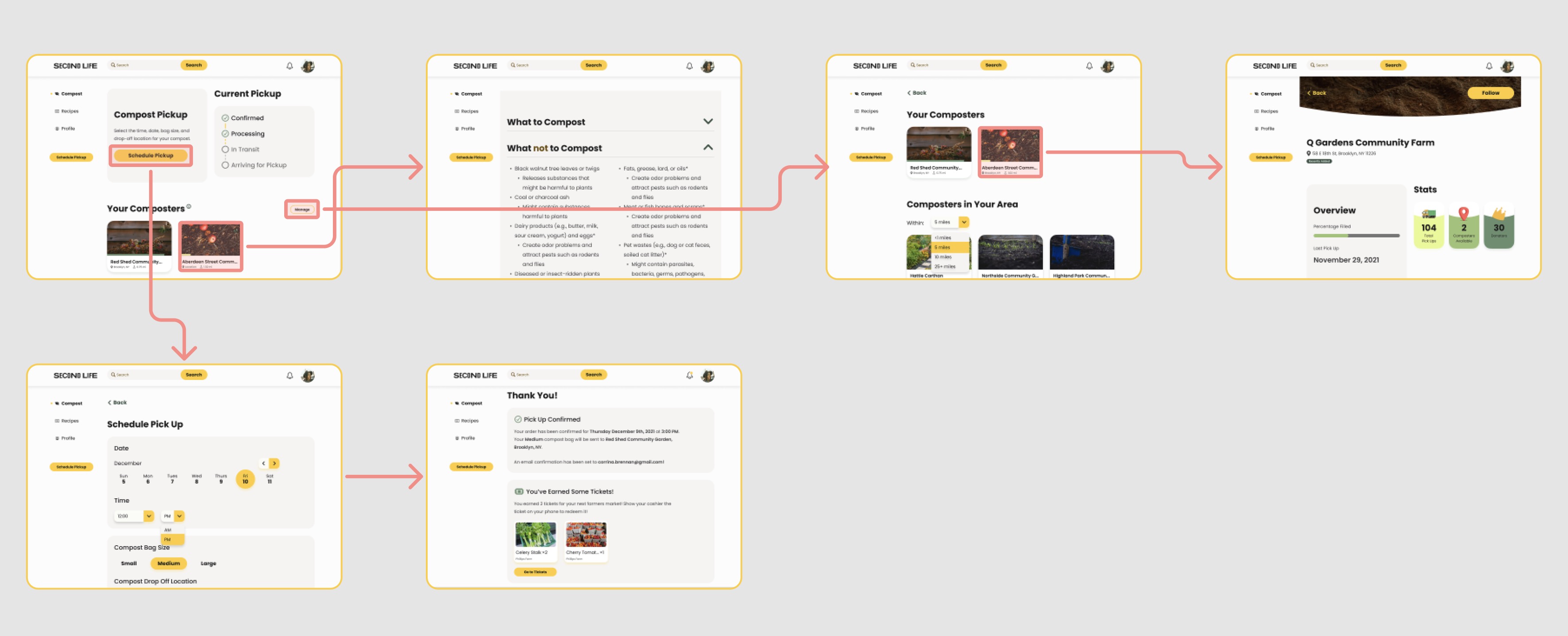
Compost
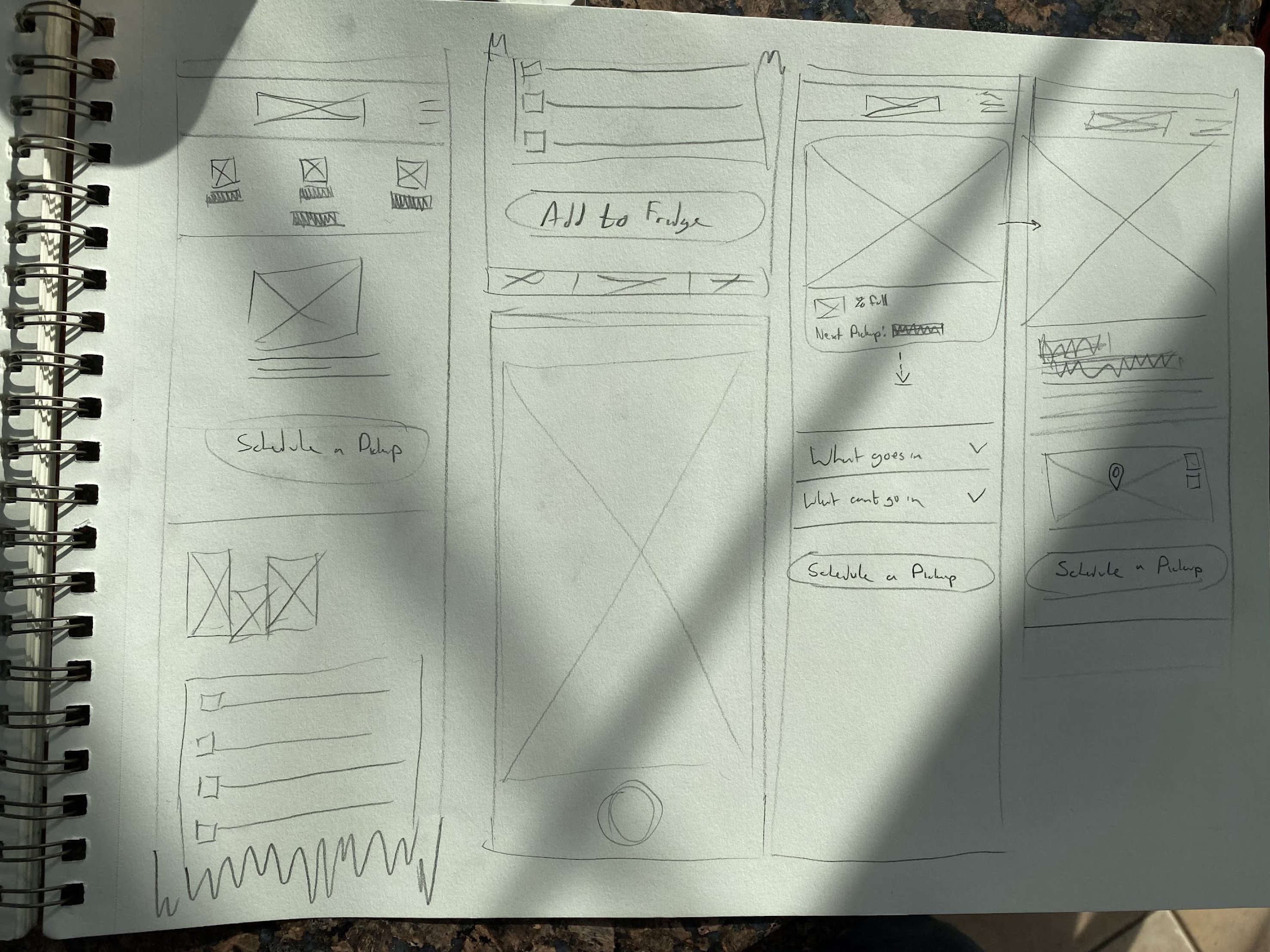
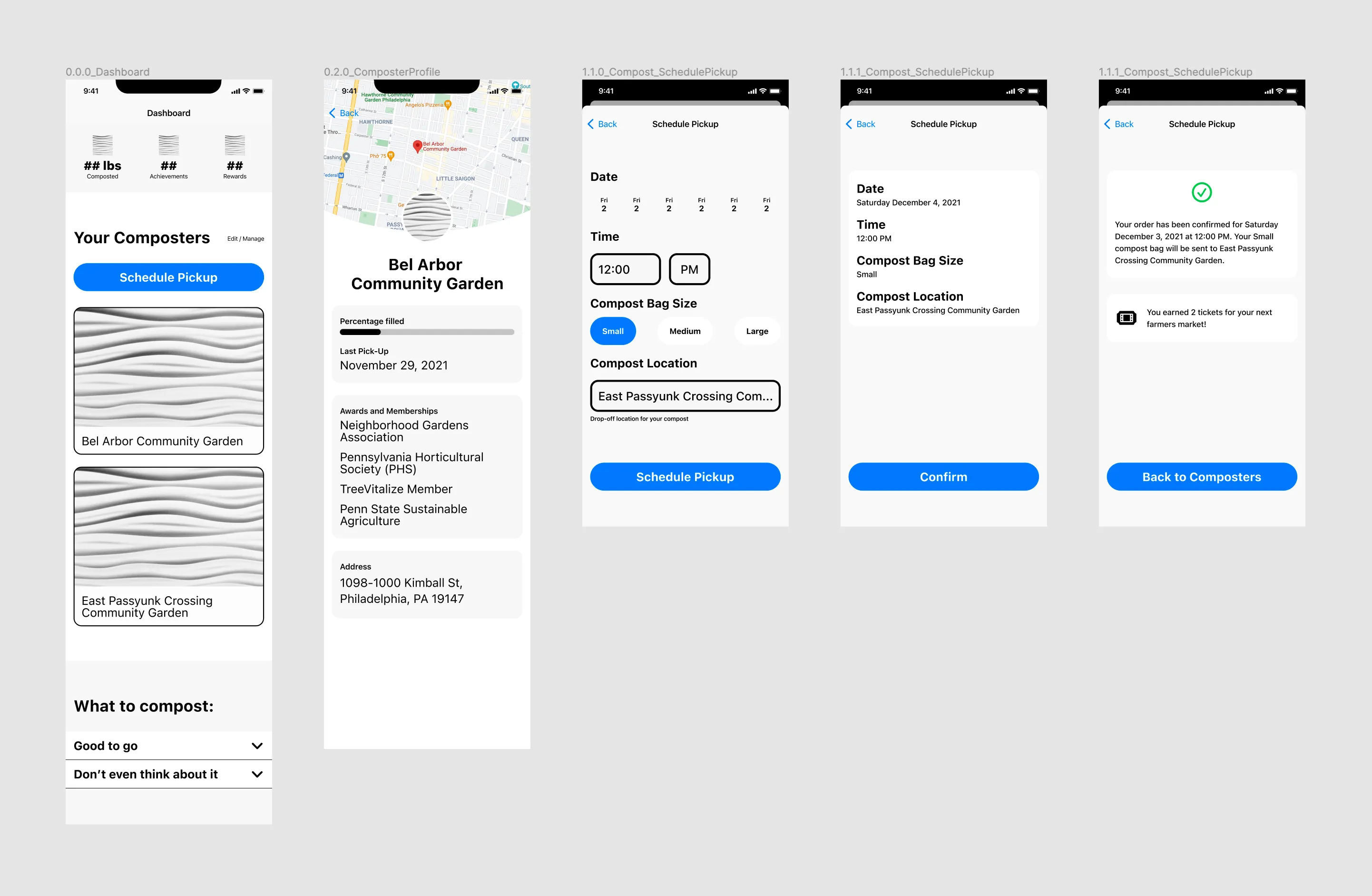
The Compost page hosts everything related to other composters the user is following, what you can or
cannot compost, and scheduling a pick up for compost.
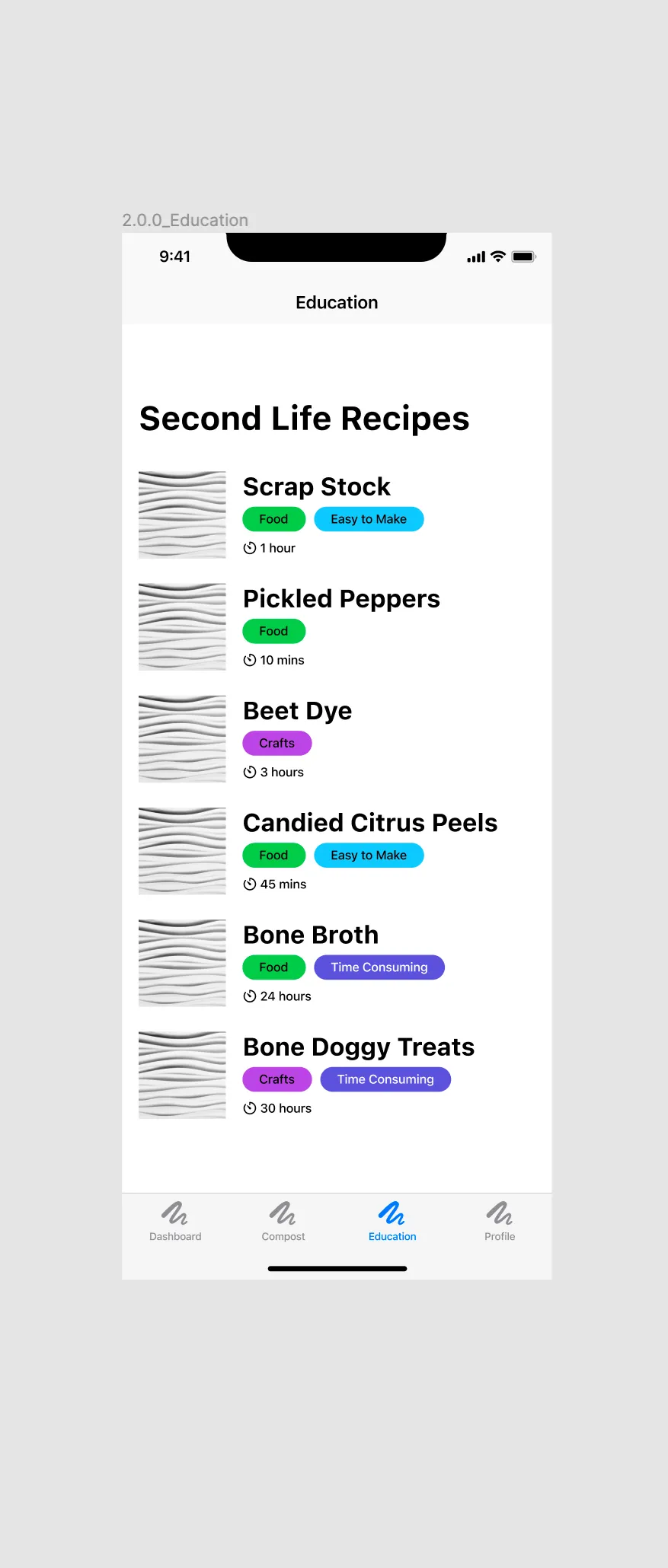
Recipes
The Recipes section is dedicated to user-created recipes for food, crafts, beverages, and anything else
related to using food scraps that one can conceive of.
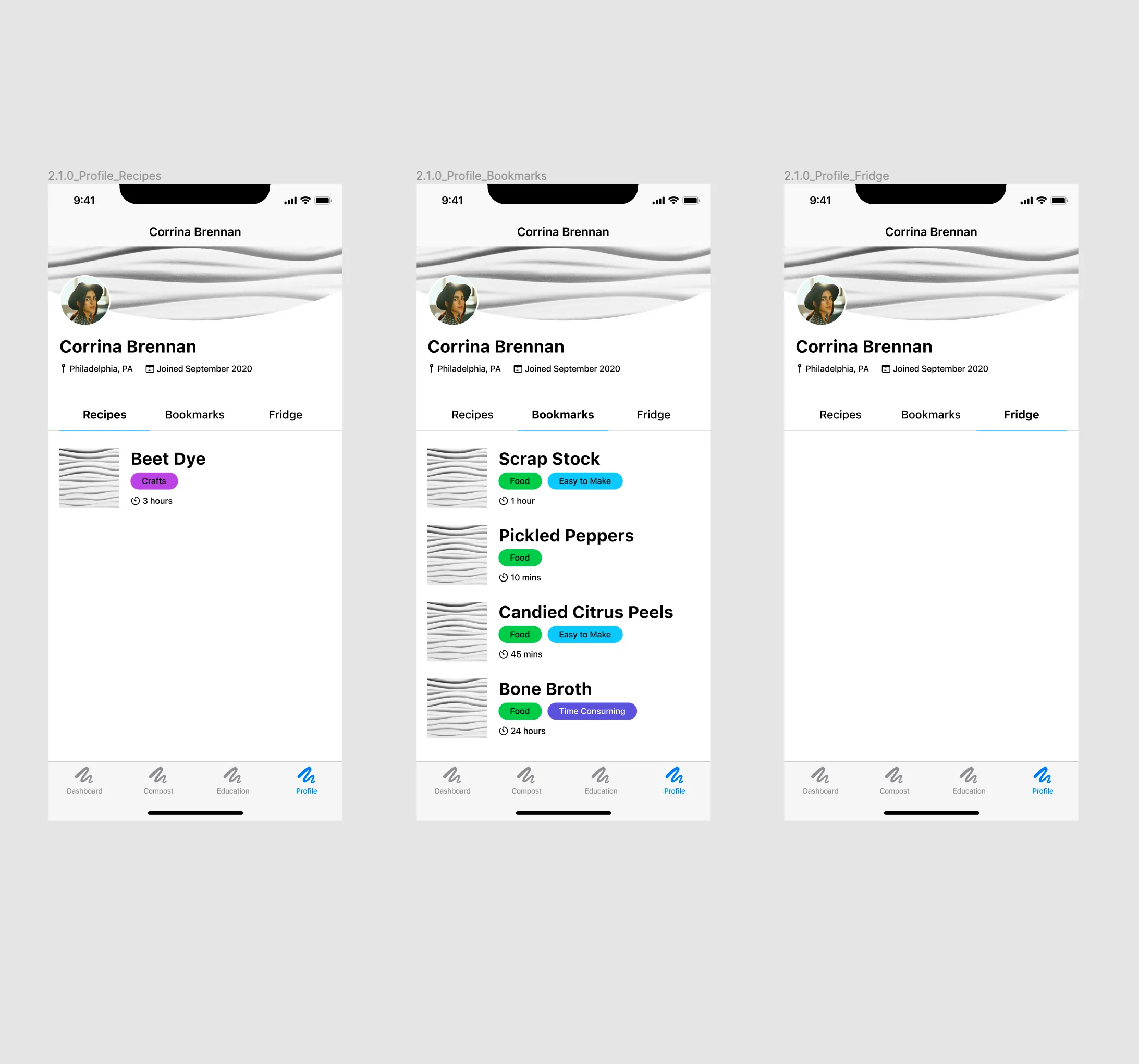
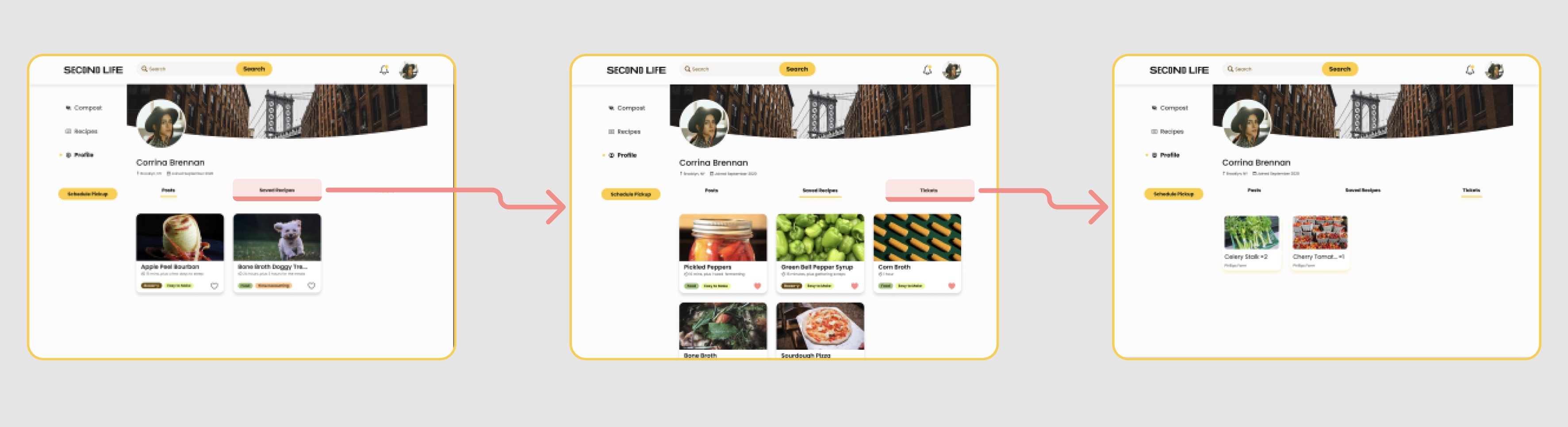
Profile
Lastly, each user has a profile where they can see the posts they have created, posts they have liked or
saved, and tickets they have earned based on how much they have composted.